
 Online Shop
Uncategorized
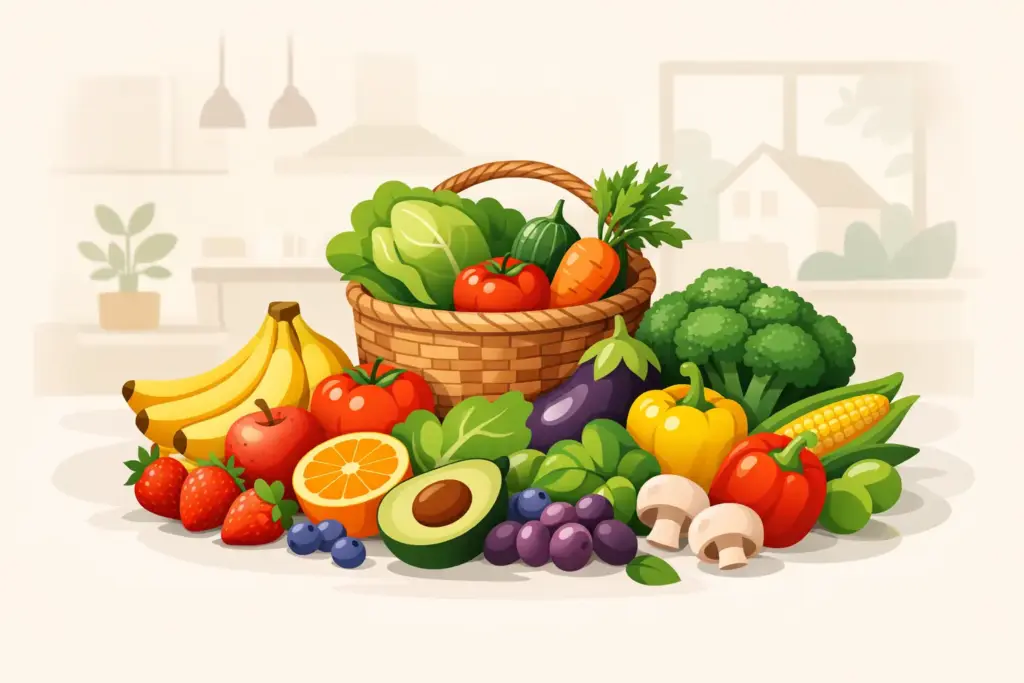
Fresh Fruits and Vegetables List for Home
Jul
A good weekly shop usually falls apart in the produce section. You start with a simple plan, then forget the basics, buy too much of one thing, and end up short on what your household actually eats. A practical fresh fruits and vegetables list helps you shop with more control, waste less, and keep the kitchen ready for everyday meals.
For most households, the best approach is not buying every colourful item on display. It is choosing a balanced mix of staples, lunchbox favourites, cooking vegetables, and a few longer-lasting options that can carry you through the week. That matters even more when you want one convenient order to cover several meals, snacks, and family needs at once.
How to build a fresh fruits and vegetables list that works
A useful list should match how your home actually eats. If your household prepares cooked dinners most nights, focus on onions, tomatoes, leafy greens, root vegetables, and a few fruit options for snacks. If mornings are busy, choose easy grab-and-go fruit such as bananas, apples, oranges, and grapes. If children need lunchbox items, smaller portions and easy-to-pack produce often make more sense than larger bulk buys.
The simplest way to plan is to divide your produce into three groups. First, buy everyday staples you know will be used. Second, add a few quick-use items for the first two or three days. Third, include longer-lasting produce so you still have good options later in the week. This keeps your basket practical rather than random.
There is also a storage trade-off to consider. Soft fruit and salad items offer convenience and freshness, but they usually need to be eaten quickly. Root vegetables, pumpkins, cabbage, apples, and citrus tend to last longer, which can reduce waste and make repeat shopping less urgent.
Fresh fruits and vegetables list for a weekly shop
The right fresh fruits and vegetables list will vary from one household to another, but some items consistently earn their place because they are versatile, familiar, and easy to use across meals.
Fresh fruits to keep on hand
Bananas are one of the most practical buys for busy households. They work for breakfast, lunchboxes, snacks, and baking, and they are usually easy for children and adults alike. Apples are another dependable option because they store well and travel easily. Oranges and mandarins bring variety, keep reasonably well, and suit homes that want simple snack fruit with less fuss.
Grapes are convenient when you want ready-to-eat fruit, though they are best bought with a plan to use them fairly quickly. Pineapple, pawpaw, watermelon, and mango can be excellent choices when in season, especially if your household enjoys fresh fruit with breakfast or after dinner. The trade-off is that larger fruit often needs prompt cutting and storage, so it is worth being realistic about prep time.
If you prefer fruit that stretches further across the week, apples, citrus, and firmer pears are usually safer choices than softer fruit. If your family enjoys variety and tends to finish produce quickly, adding berries, ripe mangoes, or other delicate fruit can make sense.
Vegetables for everyday meals
Onions, tomatoes, potatoes, and carrots sit at the heart of many home kitchens because they fit into a wide range of dishes. They support simple dinners, bulk cooking, soups, curries, stews, and side dishes without requiring much planning. Garlic and ginger also deserve space on a regular list if your household cooks often.
Leafy greens such as lettuce, spinach, and other local greens help round out lunches and dinners, but they do need faster use. Cucumbers and capsicums work well for salads, sandwiches, and light meals, while cabbage offers flexibility because it can be used raw or cooked and usually lasts longer than more delicate greens.
Broccoli, cauliflower, beans, and courgettes are useful if your meals rotate between stir-fries, roasted trays, and quick vegetable sides. For households that cook heartier dishes, pumpkin, sweet potatoes, and cassava can add value because they are filling and generally keep better than softer vegetables.
A simple way to shop by use, not just by item
One reason produce gets wasted is that people buy by habit instead of by purpose. A better method is to decide what each item is for before adding it to your basket.
For breakfast, bananas, pawpaw, pineapple, and oranges are practical choices. For lunchboxes and work snacks, apples, grapes, mandarins, and cucumbers are easy to portion. For dinners, onions, tomatoes, potatoes, carrots, leafy greens, and a couple of extra vegetables usually provide enough flexibility for several meals.
This is also where quantity matters. A large family may move through a full bunch of bananas and several kilos of vegetables without difficulty. A smaller household may be better off buying less variety in larger amounts only when those items are known favourites. More choice is not always better if half of it sits untouched.
Choosing produce that stays fresh longer
A smart fresh fruits and vegetables list is not only about what to buy. It is also about how long each item is likely to remain in good condition.
If you want produce to last across the week, prioritise potatoes, onions, pumpkins, sweet potatoes, carrots, apples, and citrus. These are dependable household staples because they cope better with normal weekly shopping routines. They are especially useful when your meal plan may shift or when family schedules are unpredictable.
If you want fresher salad options and quick-eating fruit, buy lettuce, herbs, berries, grapes, soft pears, ripe mangoes, and tender greens in quantities you can use within a few days. There is nothing wrong with buying delicate produce, but it pays to match those choices to your household’s pace.
Storage also makes a difference. Some items need refrigeration, while others keep better in a cool, dry place. Overpacking the fridge can shorten freshness if produce gets bruised or hidden behind other groceries. Keeping fruit and vegetables visible and easy to reach often helps households use them sooner.
Seasonal variety makes the list better
Seasonal produce often gives you better eating quality and better value. It can also make weekly shopping feel less repetitive without complicating the process. Instead of rewriting your entire basket each time, keep a stable base of staples and swap in seasonal fruit or vegetables where it makes sense.
For example, one week your fruit choices may lean towards pineapple and watermelon for easy sharing at home. Another week, apples and oranges may be the practical option because they hold better and suit a fuller schedule. The same thinking applies to vegetables. Leafy greens may be ideal for a week of lighter meals, while root vegetables and pumpkin may work better when you want cooking produce with a longer shelf life.
For household shoppers, this balanced approach usually works best. You get enough familiarity to keep meal planning simple, but enough variety to avoid boredom.
A realistic produce list for most families
If you want a straightforward place to start, a balanced weekly basket might include bananas, apples, oranges or mandarins, one larger shared fruit, onions, tomatoes, potatoes, carrots, one leafy green, cucumbers, capsicums, and one longer-lasting cooking vegetable such as cabbage, pumpkin, or sweet potatoes. From there, adjust based on your meal plan, family size, and how often you shop.
That kind of list covers snacks, packed lunches, cooked dinners, and simple side dishes without making your basket too complicated. It also gives you room to add extra items when you know they will be used, rather than buying on impulse.
For shoppers who want convenience first, that is usually the winning formula. Keep your produce list practical, buy with your week in mind, and choose a mix that fits real household habits. RB Patel makes that easier when you want a dependable way to stock up on fresh essentials along with the rest of your grocery shop.
The best list is not the longest one. It is the one that gets eaten.