
 Online Shop
Uncategorized
How to Compare Unit Prices and Spend Less
Sep
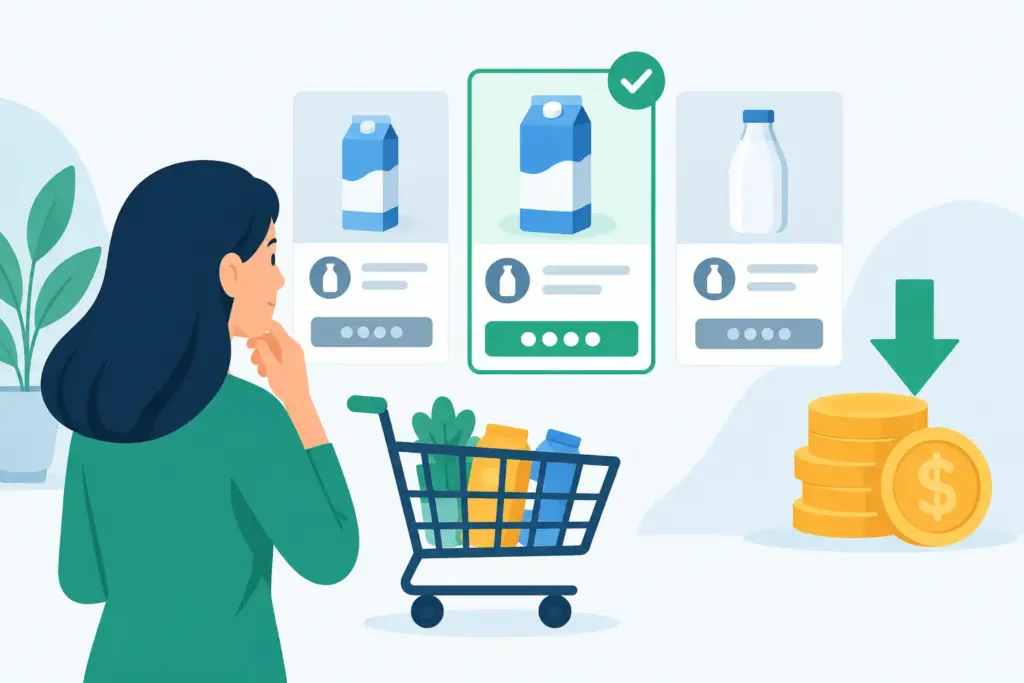
A larger pack does not always mean a better deal. A special offer does not always save money either. Knowing how to compare unit prices helps you look past the headline price and choose groceries and household essentials that give your family better value.
The unit price is the cost of a standard amount of a product, such as 100g, 1kg, 100ml or one item. It gives you a fair way to compare different pack sizes, brands and promotions – whether you are buying rice, washing powder, baby wipes or pet food.
What a unit price really tells you
The shelf price tells you what you will pay at the checkout. The unit price tells you what you are paying for the amount you receive. When two products come in different sizes, the lower shelf price can be misleading.
For example, a 750g bag of rice at FJ$4.95 costs 66 cents per 100g. A 1.5kg bag at FJ$8.40 costs 56 cents per 100g. The larger bag costs more upfront, but less for each 100g. If your household will use it before it loses quality or takes up needed cupboard space, it is the better-value choice.
Unit pricing is especially useful when packaging is designed to make comparisons difficult. One cereal may be sold in a tall box, another in a wider box. A liquid cleaner may come in a concentrated bottle, while a similar product is ready to use. Compare the stated quantity, not the size or appearance of the pack.
How to compare unit prices in three steps
You do not need to calculate every item in your basket. Start with products you buy regularly or where several pack sizes are available. A quick check can make a real difference across a weekly shop.
1. Check that the measurement is the same
Compare price per kilogram with price per kilogram, or price per litre with price per litre. Do not compare a price per 100g with a price per kilogram without converting one of them first.
Food is commonly measured by weight, while drinks, shampoo, cooking oil and cleaning liquids are often measured by volume. Toilet tissue, nappies, dishwasher tablets and snack multipacks may be priced per roll, sheet, nappy, tablet or item. The best comparison is always between like-for-like units.
2. Divide the price by the quantity
If the unit price is not shown, use a calculator on your mobile phone. Divide the product price by its size, then multiply by a convenient unit if needed.
Take two bottles of dishwashing liquid. A 500ml bottle for FJ$4.20 works out at 84 cents per 100ml. A one-litre refill for FJ$7.50 is 75 cents per 100ml. The refill costs more at the checkout, but it is cheaper to use over time.
For a simple calculation, divide the price by the number of units in the pack. A 24-pack of baby wipes at FJ$12 costs 50 cents per pack. If a 12-pack costs FJ$6.60, that is 55 cents per pack. The larger option is lower in unit price, provided both packs contain the same number of wipes per pack and are otherwise comparable.
3. Compare the product, not just the number
The cheapest unit price is not automatically the best purchase. Check the brand, product quality, ingredients, concentration and suitability for your household.
A concentrated laundry liquid may have a higher price per litre than a standard formula, but it may require less product per wash. In that case, compare the cost per wash instead. Similarly, a premium coffee may cost more per 100g but deliver more servings if you use less per cup. Unit pricing gives you a strong starting point, while the way you use the product completes the picture.
Watch for common pack-size traps
A promotion can be good value, but only when the numbers support it. Multi-buy offers are a common example. Two smaller packets for a set price may sound attractive, yet a family pack can still have the lower cost per 100g or per item.
Look at the net weight or volume on every product. Packaging, added trays and decorative containers do not add to the amount you can use. This matters with confectionery, gift packs, frozen foods and snack multipacks, where packs can look generous while containing fewer grams than expected.
Also check whether an offer requires you to buy more than you need. Buying three jars of sauce at a low unit price is only a saving if they will be used before their best-before date. A smaller pack with a slightly higher unit price can be the smarter choice for a one-person household, a product you are trying for the first time, or an item with limited storage life.
Fresh produce deserves the same practical approach. A larger bag of fruit may cost less per kilogram, but it is poor value if part of it spoils before your family can eat it. Plan around your household size, meals for the week and available fridge space.
Compare unit prices when shopping online
Online shopping makes it easier to compare products without moving between supermarket aisles. Open similar items in separate tabs or add likely choices to your basket while you check their sizes and prices. Focus on your regular staples first: rice, flour, cooking oil, breakfast cereal, milk, nappies, cleaning products and pet food.
When shopping with RB Patel, it can help to search by product type rather than going straight for the first familiar brand. Viewing a wider range of sizes may reveal a better option that suits your household. Check the product description for the net weight, volume or item count, then use the same quick calculation if a unit price is not displayed.
Do not forget delivery or collection considerations. A bulky bulk purchase may offer a lower unit price, but it still needs to fit your storage space and your budget for that shop. The right choice balances cost, convenience and what your household can realistically use.
When paying more per unit makes sense
There are sensible reasons to choose a product with a higher unit price. You may need a smaller pack to stay within this week’s spending limit. You may prefer a particular formula for a baby, a dietary requirement or sensitive skin. A smaller bottle might also be easier to carry, store or take away for a holiday.
Brand trust and product performance matter too. If a cleaner works effectively with less product, or a food item is consistently enjoyed rather than wasted, the apparent premium may be worthwhile. The aim is not to buy the lowest-priced item every time. It is to make a clear choice based on the value it provides.
Make unit pricing part of your routine
After a few shops, you will recognise the normal unit price of the products your household uses most. That makes genuine offers easier to spot and helps you avoid buying a larger pack simply because it looks like a bargain.
Keep your comparison simple. Check the unit, compare the figures and consider whether the product will be used. A few seconds spent on the items you buy every week can leave more room in the budget for the things your family genuinely needs.